Newsroom
Responsibility
Supplier Service
CN
EN
Walmart China showcased its latest achievements in technological transformation and smart supply chain development at the fourth China International Supply Chain Expo (CISCE) under the theme "New Era of Retail, Smart Supply Chain for Future," which ran from June 22-26. Located in the AI Zone of the Digital Technology Chain section, the Walmart booth highlights the latest breakthroughs in technology-powered transformation and smart supply chain operations.
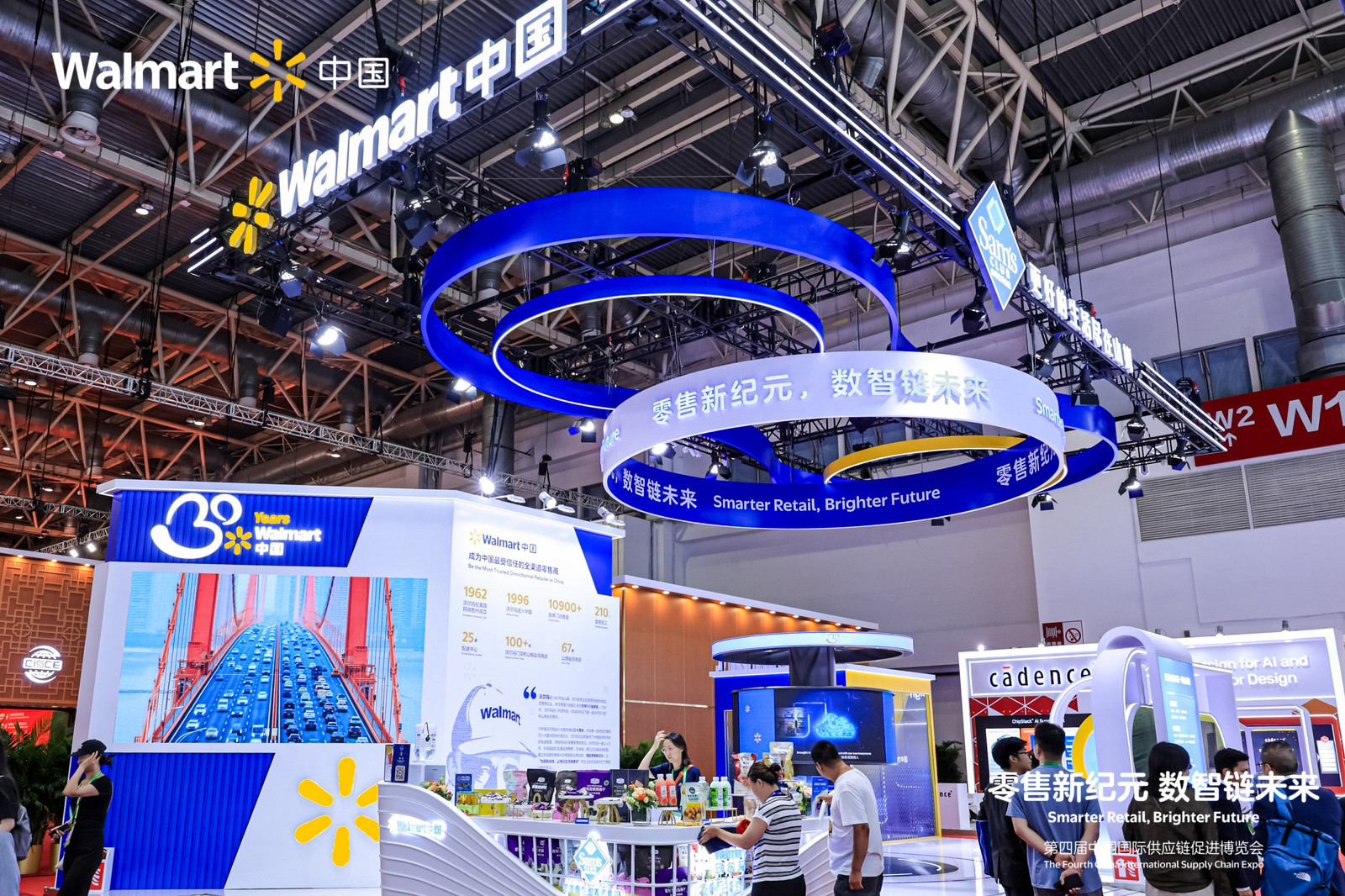
This year marks Walmart's 30th anniversary in China. For three decades, Walmart China has grown alongside the country's retail industry and witnessed every major milestone in China's consumption upgrading. Now, at the forefront of the AI revolution, Walmart China is accelerating a full-scale digital and intelligent restructuring to combine operational efficiency with a stronger focus on customers and members experience.
"Walmart is a people-led, technology-powered company," said Anthony Tsu, Senior Vice President of Supply Chain and Product, Walmart China. "We use smarter, automated tools to empower our associates and free them from repetitive tasks, so they can create more value through work and devote more time to serving our customers and members. At the same time, continuous investment in intelligent supply chains allows us to optimize merchandise decisions, operational efficiency, and omnichannel experience – so that our mission of 'helping people save money and live better' takes on new meaning in this new era."
Automation-driven Supply Chain: From Mechanical Efficiency to Ai-powered Ecosystem
At the expo, Walmart China presented a 3D model of a future smart distribution center, where automation and intelligence are fundamentally reshaping warehouse operations. The company believes that as automation and AI become more deeply integrated, retail supply chains will evolve from mechanical efficiency to AI-driven ecosystems. In March, Walmart China set up an innovation center to test new technologies in real-world warehouse conditions. This setup enables low-risk, high-efficiency testing of emerging technologies and operational models, with successful pilots then scaled across the country and, in some cases, adapted for global market. The Innovation Center is currently running multiple advanced automation trials, including four-way shuttle systems, unmanned forklifts, tote-to-person picking stations, and robotic arms. It effectively serves as a "live validation platform" for Walmart China's supply chain operations.
Walmart China has expanded supply chain automation in recent years, deploying automated sorting system at its Pingshan Distribution Center in Shenzhen, which enables rapid response from order receipt to picking and outbound conveyance. In e-commerce fulfillment centers in South and East China, as well as in selected stores, the company has introduced goods-to-person + tabletop sorting robots and tote-to-person systems, creating intelligent coordination across storage, picking, and material handling.
End-to-End Intelligence: Reshaping Retail from Insight to Experience
Walmart China's technology transformation goes beyond warehouse and logistics; it embeds digital and intelligent capabilities into every link of the operational chain – from analyzing customer needs and developing product, to automated replenishment, delivery and customer experience – creating a systemic edge for future retail.
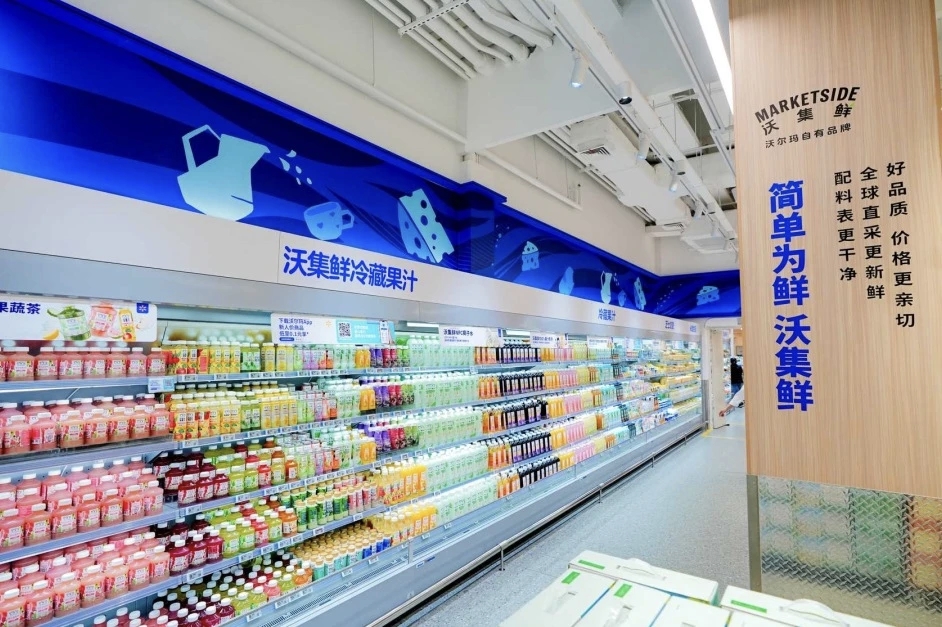
Smarter Product decisions – By feeding large language models with multidimensional data from social media, market intelligence, and internal sales, Walmart China gains a deep view of omnichannel shopper behavior. Through a human-machine collaborative process, the company has revamped its assortment planning to be more targeted and forward-looking. Some products from Walmart private-label Marketside were developed with extensive AI input, complemented by merchants' expertise; they quickly became bestsellers, with average daily sales per store far exceeding category benchmarks and generating strong social media buzz within the first month.
Replenishment and distribution – The auto-replenishment system leverages historical sales data and dynamic factors including weather, season, holidays, and promotions to build high-accuracy demand forecasting models for tens of thousands of SKUs. A replenishment agent assists associates by monitoring sales anomalies in real time, recalibrating forecasts through historical event recalibration and latent-variable inference and sounding early warnings for potential stockouts or overstocks. Within the multi-tier network of distribution centers, stores, and cloud warehouses, an intelligent vehicle planning system – powered by a logistics control tower – uses machine learning for volume forecasting and route optimization, significantly boosting logistics productivity.
Customer experience – Walmart continues to apply technology to further tailor product discovery and boost customer engagement. Walmart stores have introduced AI-powered vision scales that automatically recognize fruits and vegetables even inside multi-layer plastic bags, cutting weighing time by 40%. Sam's Club has rolled out a tap-to-show NFC feature for membership codes, enabling one-second payment at checkout.
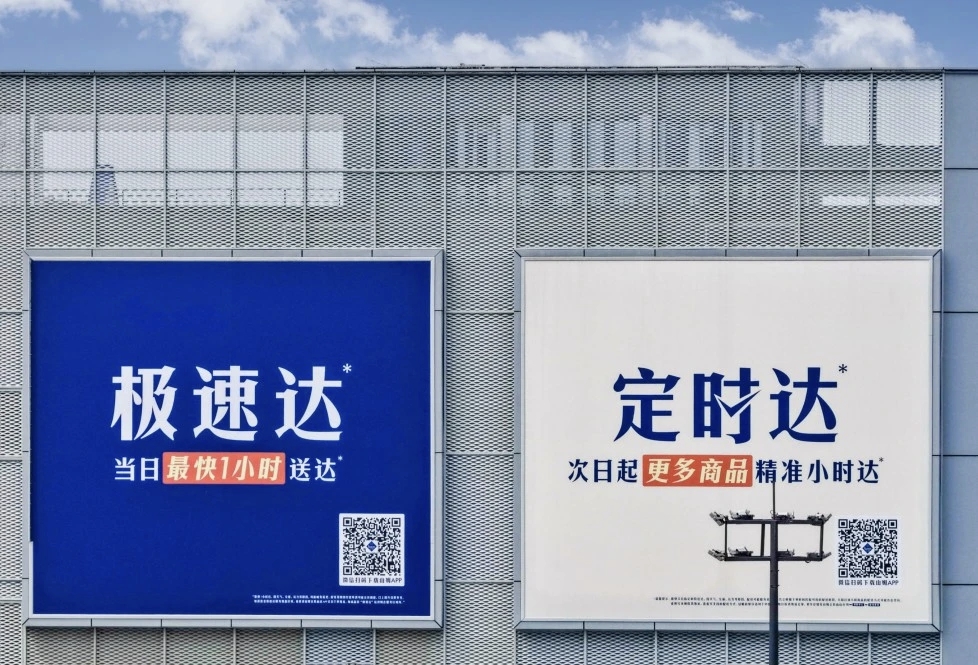
Fulfillment – Walmart's fulfillment middle platform optimizes warehouse selection and delivery routes in real time based on key parameters such as address matching, stock availability, and parcel dimensions. With intelligent sorting robots in place, fulfillment centers have nearly doubled their efficiency compared with traditional models. In Sam's Club's express delivery, intelligent positioning systems and real-time warehouse-to-delivery coordination ensure that even orders containing ambient, chilled, and frozen items are picked up and packed in just two minutes on average, with nearly every order delivered within one hour. Handheld smart devices help warehouse associates pinpoint items quickly, while back-end systems dynamically dispatch delivery resources based on order volume – a tightly integrated mechanism that ensures "perfect fulfillment."
People-led Innovation: Putting AI to Work on the Frontline
Walmart stays true to its "people-led, technology-powered" principle by turning high-level tech into practical tools for frontline associates, relieving them from repetitive tasks so they can invest more time in serving customers and members.
Working with partners like Feishu, Walmart has built an efficient digital collaboration ecosystem. A standout tool is the store operations assistant app, powered by a digital knowledge base and AI Q&A capability, the app helps new recruits complete orientation and start working independently within one week. It also taps into the product data to deliver real-time selling-point summaries and inventory figures, helping associates better serve customers on the spot.

RFID-enabled warehouse tools allow associates scan hundreds of items across an entire shelf or zone in seconds, generate cycle-count reports, and sync data with the management system instantly – enabling automatic anomaly alerts and providing timely input for replenishment and allocation.
On the supply chain side, the distribution centers nationwide process nearly 150,000 pallet transfer documents each month, with manual data entry consuming about 150,000 working hours annually. After AI intervention, the time spent on data entry has been reduced by 98%. Walmart is now expanding automated data auditing across more systems to create a fully closed-loop process, freeing associates to focus on logistics efficiency and service quality.
Green Commitment: Building A Regenerative Supply Chain
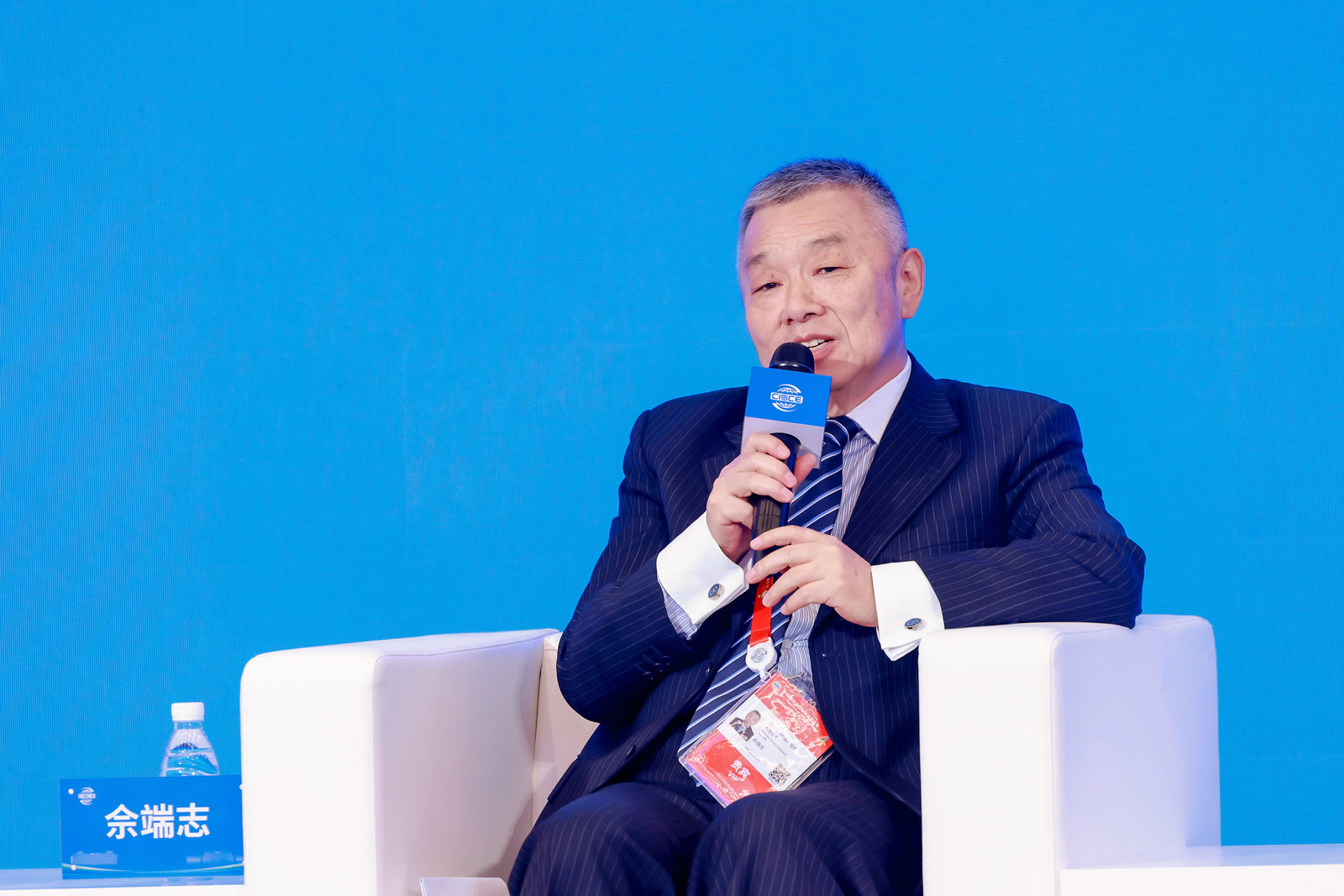
During the Expo, She Duanzhi, Senior Vice President of Corporate Affairs, Walmart China, spoke at the green agriculture thematic event about how Walmart is working with partners to build a green supply chain while promoting high-quality industry development. He noted that Walmart is committed to becoming a "regenerative" company, placing nature and people at the center of its business practices. Many if the agricultural goods in Walmart Stores and Sam's Clubs across China and around the world – from organic vegetables to sustainably sourced seafood – not only offer customers and members healthy, reliable, premium products, but also represent the ongoing effort to reconcile farming with the natural environment.
Walmart China also launched Project Gigaton, working with suppliers to reduce or avoid one billion metric tons of greenhouse gases from the global supply chain. The project continues to gain momentum, with more than 3,700 suppliers worldwide participating, including over 400 in China. These partners are taking action across six key areas: energy, nature, waste, packaging, transportation, and product use and design – collectively driving low-carbon transformation and building a greener future.

 Walmart APP
 Sam's Club APP
 Walmart China
  Walmart China
  Walmart Stores
  Sam's Club